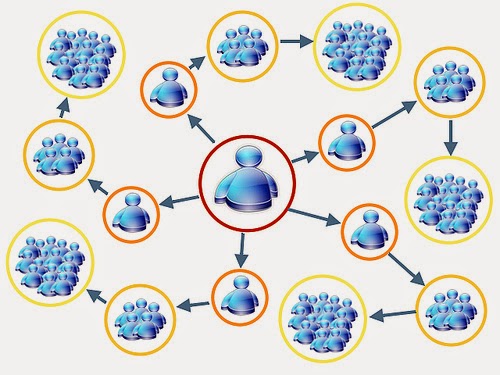
 Emergency notifications are an area that every organization needs to master before it is needed. Solutions basically fall into 3 groups:
- Call tree or cascade system
- A 1-800 hotline number for employees to call
- An automated Emergency Notification System (ENS)
Call trees, I've observed, are typically organized in one of two ways. Using a department of 30 people as an example, the call tree would usually be organized one of the following ways:
- The department manager calls all 30 people, noting anyone they are unable to get in touch with.
- The department manager calls employee #1, who calls employee #2, who calls employee #3, and so on until employee #30 is contacted, who then calls the department manager to confirm all notifications were made. If employee #1 is unable to reach employee #2, they are to call employee #3, and continue calling employees until the next person is reached. The is also called a cascade system, or "call stick" since it resembles a stick more than a tree.
Call tree procedures often lack the depth needed in the event of an actual incident. Even if procedures are sufficiently detailed, both methods have benefits and pitfalls, as illustrated in the two tables below.
With either of these options, notifications will take a long time. Both methods are open to human error.
Both methods have the problem of keeping the call trees updated and distributed, which may be feasible for an organization with 20 people, but not for an organization with hundreds or thousands. Both methods have the issue of how you are generating the call trees and storing information: is this information being pulled from he human resources / payroll data, or are departments expected to maintain their own call trees?
I've talked with many defenders of call trees, who believe if the procedures are detailed enough, they will be successful when needed.
I have to disagree. Getting employees to keep their contact information current in human resources / payroll data is difficult, getting employees to maintain current contact information in two systems in nearly impossible. Someone has to enter new employees and take out employees no longer with the company. It is almost certain that at any given time, the information in the two systems will differ.
As business continuity professionals, we have to take into consideration the opportunity (and great potential) for human error in the middle of an incident or disaster.
The time it takes to reach employees can be critical if, for example, your company is trying to verify no one was in the building at midnight when a disaster happened.
I've never encountered, in any company, someone in the legal department who would approve of giving out employee contact information past the management level. It's simply a breach of confidentiality, and something the company has no right to do without documented consent from employees.
So why are so many companies using call trees? I think it's often a case where the business continuity professional is given direction to use call trees as a notification strategy, often by upper management. The business continuity professional distributes the call trees, and no one objects . . . until something goes wrong. Upper management sometimes just fails to realize that confidential information is being shared not only with management but other employees, possibly even the legal department doesn't realize what is happening, and no one considers the risks and implications of this strategy.
Some of the best Human Resources personnel I've known have refused to grant Business Continuity any access to employee contact information, because of the confidentiality involved and because of the risks in granting access to systems often used for payroll. Obviously, that is a problem that impacts call trees and other methods of employee notification.
I can't recommend call trees to any organization I work with other than small businesses, and then the confidentiality issue still has to be addressed.
Business continuity professionals need to educate upper management about the risks and short-comings of call trees, and steer them in another direction.
I'll discuss other options for notification tomorrow. Thanks for reading.



